

Last updated on April 26th, 2024
Scientific discoveries have produced evidence that goes against evolution, but this is downplayed or disregarded. At the same time, speculative arguments in support of evolution are claimed to be facts.
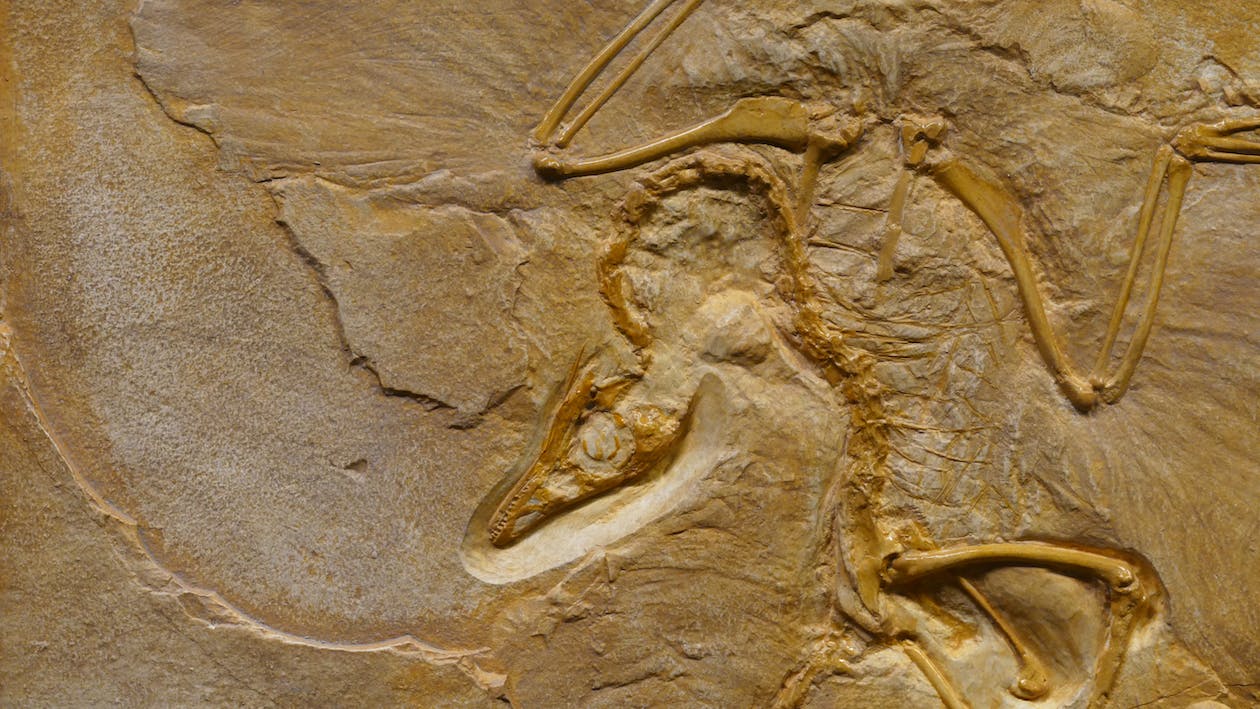
Archaeopteryx – claimed to be evidence of evolution from dinosaurs to birds
- Evolution and the speculation behind it
- Facts and theories — limitations of observable evidence
- Evidence against evolution in DNA mutation
- Evidence against evolution in fossils, rock strata and dating methods
- Evidence backing up the flood theory and young Earth
- Conclusion — summary of evidence against evolution
Introduction
Speculation is when an opinion is formed from incomplete information. It can be based on factual data, but not enough to provide conclusive evidence. In science, the term ‘speculation’ is rarely used. The preferred term is ‘hypothesis’.
A hypothesis is a prediction or proposed idea that explains how something exists. In general terms, it is an assumption based on existing information. A scientific hypothesis should be testable, and is the first step in building a theory.
Evidence of evolution over millions of years cannot be directly observed or tested. The only methods available to test many hypotheses on evolution are prediction or comparison (i.e. looking for similarities); however, neither prediction or comparison can provide conclusive evidence of evolution.
As the information they are based on is often ambiguous, many scientific hypotheses, theories, and even facts, are merely speculations. By using persuasive arguments, and a great deal of exaggeration, such speculations are promoted as though they are unquestionably true.
New scientific discoveries reveal weakness in the theory of evolution. When evidence supporting evolution is put under scrutiny, and full details are taken into account, serious flaws can be clearly seen, and the speculation and bias behind such claims become apparent.
Evolution and the speculation behind it
Evolution is the most widely accepted explanation of how all of the various forms of life came into existence, being the only theory that is agreeable to modern man. Arguments as to whether or not there is evidence of evolution are pointless, as there are two main scales: ‘microevolution’ and ‘macroevolution’.
Both scales of evolution are claimed to share the same genetic processes, with macroevolution taking place over a much longer time period (i.e. millions of years). This is speculation, and ignores the fact that we have conclusive evidence of microevolution, but no conclusive evidence of macroevolution.
Microevolution
There is conclusive evidence of microevolution. This is where organisms adapt and change in various small ways (e.g. colour, size and shape). This level of evolution occurs when existing genetic information is altered, and the changes are passed on through natural selection.
Evolution at the species level is directly observable, as the changes occur during a short time period. Such changes sometimes result in organisms being classified as new species. For example, the Italian sparrow is a hybridisation between the house sparrow and Spanish sparrow. Changes such as this are limited, affecting only the existing structure and functionality of an organism (i.e. a sparrow remains a sparrow).
Macroevolution
There is no conclusive evidence of macroevolution. This is the belief that organisms can evolve into a different kind of species on a large scale (e.g. fish to mammals). Rather than only altering existing genetic information, this process would require the development of new genes that provide entirely new structures and functionality.
Evolution above the species level is not directly observable, as the changes would have to occur over millions of years. The only evidence claimed to support evolution above the species level is based on predictions or similarities between organisms (e.g. similarities of fossils, DNA, or anatomical similarities between species).
Genetic mutation and natural selection
Some changes in organisms are due to the mutation of genes. In this situation the DNA sequence is altered, causing changes to functions or structures the gene caters for. Such mutations occur in a single organism, and any hereditary mutations are passed on via natural selection.
Other changes are known as epigenetic modifications. In this situation the DNA sequence remains the same, but environmental changes (e.g. diet, stress, pollution, etc.) result in the addition or removal of chemical tags. The tags determine which genes should be switched on or off, and at what intensity they are expressed. These modifications can affect multiple organisms simultaneously, and are passed on via natural selection.
Genetic mutation is claimed to be the main mechanism behind evolution. Mutation produces genetic diversity on a microevolutionary scale, where genetic functions can be altered, lost, inactivated or re-activated; however, there is no conclusive evidence that genetic mutation can lead to macroevolution.
It is claimed that new genes with new functions can occur through mutation, which is evidence of macroevolution. While genes can be duplicated, and genetic functions can be be altered, the changes are always within limits of the original function. There is no conclusive evidence that organisms can develop new genes that have completely new functions — at a level required for macroevolution.
The peppered moth and Darwin’s finches are claimed to provide observable evidence of evolution. While seeming to provide indisputable evidence on the surface, under scrutiny these cases are revealed to be inconclusive.
The peppered moth, native to Britain, is naturally a light grey colour, peppered with specks of black. This colour is the perfect camouflage for the moths in their natural environment. During the Industrial Revolution of the 1800s, pollution increased, turning the environment black from soot. Years later, it was noticed that the moths had become almost black, matching their new environment. This was claimed to be evidence of evolution, and that the moths changed colour to hide from birds.
A loss of function mutation was later discovered in the moth DNA. This caused pigments in the wings to become darker (melanism). Any moths having this mutation would originally have been more vulnerable to predation, as they would be more visible. Due to the environment being darker, moths that blended into a dark background had a higher survival rate, passing on their genes via natural selection.
The Clean Air Act of 1956 cut pollution levels dramatically. Years later, the environment changed back to its natural, lighter colour. Eventually, the peppered moths also began turning back to their original colour. This is nothing more than natural selection, and no new information was added to the gene pool through the mutation.
Darwin’s Finches became separated in different habitats, with different food supplies. Those in the new location developed different behaviour and different beaks. This was claimed to be evidence of evolution.
It was later discovered that the changes were brought about by epigenetics, and the change in beak size was due to an inactivated gene. Birds with the new beak size became the fittest, being best suited to the new food source. Through natural selection the original variation was bred out. Although considered separate species, Darwin’s Finches are still birds, and they are still finches. Again, no new information was added to the gene pool through the genetic changes.
Unless they find that their environment has altered, and natural selection plays a part, organisms don’t often change. On the other hand, some plants and animals frequently change due to selective breeding (artificial selection).
Artificial selection is a process where plants and animals with specific characteristic traits are developed. Unlike natural selection, fitness and environment do not play a part in the adaptation of the species. Instead, individual organisms that have specific traits are selectively bred through human intervention, enhancing those traits.
Livestock have been selectively bred in order to increase the amount of wool, milk or meat that can be obtained. Dogs have been selectively bred, originally for various purposes such as hunting or herding, but now mostly to produce pets that suit all types of individual.
Sometimes random loss of genetic diversity occurs within a population of organisms (referred to as genetic drift). When organisms of a particular species become isolated, or small in number, they are more likely to experience genetic drift.
When genetic drift occurs, genetic variations that are beneficial in other environments can be bred out (i.e. they cannot be reactivated). This means that affected organisms lose the ability to adapt to changes in their environment. Genetic drift also increases the likelihood that organisms will suffer from health problems.
Artificial selection often results in genetic drift, and inbreeding. This has brought about many detrimental effects in animals, meaning that they do not perform well in the wild.
Many newer breeds of livestock have trouble giving birth, meaning that they frequently require assistance. Whereas wild sheep shed their wool naturally, artificial selection has prevented domesticated sheep from shedding their wool, resulting in the requirement of shearing.
Dog breeds have changed vastly over the years, causing many to look nothing like their original form. While dog breeders find the new appearance appealing, selective breeding has introduced many health defects, resulting in a great deal of suffering for specific breeds.
There is no doubt that organisms do evolve naturally on a small scale; however, evidence shows us that such evolution is limited. We find no observable evidence of a fish changing into anything other than a fish. There is no conclusive evidence that any organisms have evolved into any other kind than what they originally were.
Evolution in the fossil record
It is claimed that rock layers in the Earth represent specific time periods, with each one spanning millions of years. Fossils of various organisms have been discovered, and their position within the layers is claimed to reveal the history of life on Earth — referred to as the fossil record.
Fossils are claimed to become more complex in each higher rock layer. This is claimed to be evidence of evolution, revealing how organisms transition from one kind to another over time.
All that the fossil record really reveals is that stratified layers of sediment were laid down in order, and organisms were buried during each stage. Fossilisation requires rapid burial in a substantial amount of sediment and water (i.e. mud). This would indicate that each layer was formed quickly, rather than taking the millions of years evolution requires.
If a global cataclysmic flood occurred, we would find that organisms were buried in sediment in a similar order, but far more rapidly. Organisms that lived on the ocean floor would be buried in massive layers of sediment first. Other sea creatures would be buried after, followed by creatures that lived on land.
While many fossils are considered transitional forms, such claims are based on speculation. Some supposed transitional fossils could be the same organism at different stages of life, or separate species of the same kind. All claims of transition in fossils are based on similarities, but similarities do not provide conclusive evidence of evolution.
Some fossils previously claimed to be transitional forms (e.g. those referred to in the evolution of the horse) were later discovered to persist unchanged throughout the same time line. This proves that the separate organisms lived together, rather than one evolving into another. Evidence such as this reveals the level of speculation involved in claims related to transitional fossils.
There are several organisms once thought to be extinct that are still alive today, showing no evidence of evolution. These are what are known as ‘living fossils’. One example is the coelacanth, a fish that is claimed to have first appeared in the fossil record during the Devonian Period (around 400 million years ago). Based on the youngest fossil discovered, it was believed to have become extinct around 65 million years ago.
The coelacanth is in a class of fish named Sarcopterygii, which are lobe-finned fish. They have paired fins that contain muscle, which are joined to the body via a single bone. Fossil evidence of the coelacanth revealed four fins containing leg-like bones, and it was assumed that it could walk on its fins. It was claimed to have evolved full legs, and that it was a missing evolutionary link between fish and four-limbed vertebrates (tetrapods). This was first published as a fact in biology textbooks in the early 1900s.
In 1938, a surprise discovery revealed that coelacanths were still alive, and that they were relatively unchanged from their fossilised ancestors. They were revealed to be deep-sea fish that would rarely go anywhere near land. It was evident that their fins were only used for swimming, and certainly would not be able to provide any form of support or movement on land whatsoever. This is further proof of the high level of speculation in claims related to fossils.
In 2004, a fossil of another fish in the class Sarcopterygii was discovered, named Tiktaalik. This was claimed to have lived during the Late Devonian Period (around 375 million years ago). Although it had gills, it is claimed that it also ‘possibly’ had a primitive form of lungs, similar to lungfish, and that it could walk on its fins.
In many articles, it is claimed that lungfish walk on their fins. This description is misleading. Lungfish move their fins in a ‘walking movement’ when in water, but cannot support themselves or prop themselves up on land.
In September 2016, the journal Nature included an article titled, “Trackways Produced by Lungfish During Terrestrial Locomotion.” The article covered studies on sediment impressions made by African lungfish while moving on land.
The studies revealed that the fins of African lungfish were insufficient to provide support or propulsion on land. The head was used to pivot the body, which resulted in alternating left-right impressions in the sediment. The body and fins left few traces. The tracks from the head could easily be mistaken for those of limbed organisms, whereas they were not made by limbs (or fins) at all. Scientific evidence has again revealed the speculation behind claims related to evolution.
Original claims regarding the pelvic girdle of Tiktaalik suggested that its structure would support it while on land. Further analysis revealed this to be false, due to the lack of sacral ribs. In addition to this, its fins were discovered to be fish-like, and would not support movement on land either.
As scientists have made claims that Tiktaalik could walk on land, this shows a blatant disregard of scientific evidence. Although similar, speculative claims related to the coelacanth were proven to be false, those related to Tiktaalik are still upheld. Even with no reliable evidence to back it up, Tiktaalik is still claimed to be a transitional fossil in the evolution from fish to tetrapods.
In January 2010, the journal Nature included an article titled, “Tetrapod trackways from the early Middle Devonian period of Poland”. The article described the discovery of well-preserved tetrapod tracks, dated to be in the Middle Devonian Period (around 397 million years ago).
The date of these new tetrapod tracks predates Tiktaalik by 18 million years, proving that tetrapods existed before this claimed transitional fossil. This is further proof of the high level of speculation in claims related to fossils.
Although the fossil of an organism may only have been discovered in a specific layer, this does not signify that it only lived within the time line the layer represents. As with the coelacanth, the organism may have lived for millions of years without having left any fossils at all, and it may not have changed in any significant way over the millions of years it is unaccounted for. For this reason alone, it is obvious that any claims of fossils showing transition between species are based purely on speculation.
At certain points in the fossil record, rather than a gradual appearance of possible transitional forms, there is a sudden appearance of a large number of diverse fossils, all in one area. One such example is the Cambrian explosion, where a large number of organisms suddenly appeared to have evolved during the Cambrian Period (around 541 million years ago).
The sudden emergence of such diverse organisms in the fossil record goes against the estimated rate of evolution. Some scientists claim that, rather than a rapid transition, each case represents a large increase in fossilisation during that period. Either way, using the fossil record as evidence of transition between species has been proven unreliable by these discoveries. In fact, the existence of such diversity in one area does more to promote mass fossilisation due to a cataclysmic flood — evidence which is ignored, as it goes against evolution.
The fossil record itself does not provide conclusive evidence of evolution. There is no real evidence of species gradually evolving into other kinds of species on a large scale: in fact, there is hardly anything in between that resembles transition between species. Even Darwin himself, the man who brought us the theory of evolution, wrote in his book ‘The Origin of Species’ that he had doubts concerning evolution:
“Why then is not every geological formation and every stratum full of such intermediate links? Geology assuredly does not reveal any such finely graduated organic chain; and this, perhaps, is the most obvious and serious objection which can be urged against the theory.” — Darwin, The Origin of Species
Many people consider Darwin’s statement to be outdated, saying that we now have information that wasn’t known in Darwin’s time, and that fossils of possible transitions have been found; however, Darwin’s point was not that there were no fossils of possible transitions, but that he would expect to find “every stratum full” of “finely graduated” fossils at various intermediary stages of transition, which we still cannot find today. The fossils that we have discovered might seem to be transitional stages between species, but there is no reliable evidence to prove that the fossils are linked at all.
Evolution from dinosaurs to birds
If dinosaurs evolved into birds, as evolution claims, we would expect to find fossil evidence of dinosaurs in intermediary stages of evolution. Fossils of dinosaurs evolving into birds should reveal feathers that are partially formed or only covering certain parts of the body.
The only fossils that conclusively have feathers are those classified as birds, and the feathers are always fully formed. Claims of dinosaurs having feather-like structures, or transitional stages in feathers, are based on speculation.
Scientific papers on feathered dinosaurs actually reveal that the structures are merely hairs. Some feathers preserved in amber have been referred to as dinosaur feathers, but there is no conclusive evidence that the feathers are from dinosaurs at all. Close scrutiny of any so-called dinosaur feathers reveals the speculation behind such claims, and the exaggeration of evidence.
Sometimes dinosaur fossils have indistinct structures on the skin, and due to their appearance they are assumed to be feather follicles. Other fossils have structures on the skin that are usually just lines. These filaments are more akin to fine hairs than feathers, but are assumed to be an evolutionary stage in feather production (protofeathers).
A dinosaur fossil was discovered in 1996, named Sinosauropteryx, which scientists claim lived during the Cretaceous Period (around 130 million years ago). The fossil is claimed to have feather-like structures that are protofeathers. This claim is speculation, as the structures are more like bristles, and show no similarity to feathers at all.
In 2005, the Journal of Morphology published research titled ‘Do Feathered Dinosaurs Exist?’ The paper claims, “The major, and most worrying, problem of the feathered dinosaur hypothesis is that the integumental structures have been homologized with avian feathers on the basis of anatomically and paleontologically unsound and misleading information”. Terms such as ‘unsound’ and ‘misleading’ are very harsh, and confirm the high level of speculation involved in claims supporting evolution.
When sequenced in 2004, it was discovered that the chicken genome contains instructions for producing wing claws, a long bony tail, and teeth. It was also discovered that these genes become inactivated during the embryonic stage. While these features are referred to as ‘reptilian’, they are evidence that birds did have wing claws, long bony tails, and teeth in the past. The lack of these features in modern birds is from loss of function, and is not evidence of evolution — which would require that new genes producing new structures were added to the gene pool.
In 1861, fossils were discovered of a lizard-like bird named Archaeopteryx, which scientists claim lived during the late Jurassic Period (around 150 million years ago). The fossils were previously considered to be the missing link between dinosaurs and birds, mainly due to Archaeopteryx having claws at the end of its wings, a long bony tail, and teeth instead of a beak. Each fossil varies slightly in size, and has varying sizes of claws and teeth. These slight differences are claimed to be evidence of evolution.
Regardless of having some features that are referred to as ‘reptilian’, Archaeopteryx is classified as a bird, had fully formed feathers like modern birds, and was able to fly, albeit rather poorly. Although the tail has many unfused vertebrae, similar to dinosaurs, the vertebrae structure is not similar to those supporting the muscular tails of dinosaurs.
Twelve fossils of Archaeopteryx have been discovered over several decades, in various locations in Germany. The only difference between them is the slight variation in size, and the size of claws and teeth. The fossils could be birds of varying ages, or perhaps different species, rather than different stages of evolution. Treating Archaeopteryx as a link between dinosaurs and birds is nothing more than speculation.
Rather than providing evidence of evolution, the similarities between all of the fossils of Archaeopteryx is a blow to the theory of evolution. The same small level of change in the size of Archaeopteryx can be witnessed via microevolution occurring in organisms today. In order to be considered as evidence supporting evolution, a gradual transition of more than just size would be required.
In 2016, a chunk of amber was found to contain part of a small feathered tail, claimed to be from a juvenile dinosaur. The fossil is known as DIP-V-15103, and is claimed to come from the Cretaceous Period (99 million years ago). The full tail is assumed to have up to 25 unfused vertebrae, which is far more than birds, and is the basis for the claim that it belongs to a dinosaur.
Claims related to DIP-V-15103 are based on speculation. Analysis was hindered due to there being few differences between the soft tissue and bone. Only two tail (caudal) vertebrae are clearly visible. Due to the length of the tail, it is estimated that it contains 8 vertebrae. Also, due to the shape of the vertebrae, scientists assume that this is from the middle section of the tail, and that the full tail would ‘probably’ have up to 25 vertebrae.
The claim that unfused caudal vertebrae are only a characteristic of dinosaurs, and not of birds, goes against existing scientific evidence. Fossils of Archaeopteryx, classified as a bird, have tails with up to 22 unfused vertebrae. Even modern birds have up to 9 unfused caudal vertebrae, and this is increased in the juvenile stage — a stage that DIP-V-15103 is considered to be at.
Archaeopteryx predates all fossils of dinosaurs claimed to have feather-like structures (e.g. Sinosauropteryx and DIP-V-15103) by millions of years, revealing how irrational some of these claims are.
Until quite recently, the supported theory of how birds attained flight was that they dropped their teeth — via evolution — to lose the extra weight. Science has now revealed this speculation to be false, and that flying birds originally had teeth. We now know that a mutation caused a gene related to the development of teeth to become inactivated.
Although there are no living birds that have teeth, fossils of birds with teeth have been discovered. Ichthyornis and Hesperornis are two such examples, which scientists claim lived during the Cretaceous Period (around 85 million years ago).
Apart from the teeth, these birds are no different to modern birds. Hesperornis was unable to fly, being more like a penguin, and therefore didn’t need to drop its teeth for flight. Ichthyornis was similar to a gull and was able to fly, even with its teeth. The fact that a toothed flying bird existed proves that birds losing their teeth was not related to the evolution of flight. This evidence once again reveals the speculation behind many claims related to evolution.
Although not commonly known, ostriches, swans, ducks, geese, and some other birds have wing claws. There are birds living today with well-developed wing claws that are lost at adulthood, where the claws are used by the young birds to assist with climbing. Two such birds are the African turaco, and a ‘primitive’ bird from South America called the hoatzin.
The hoatzin is of particular interest, having a small breast bone (sternum), similar to Archaeopteryx, meaning that it cannot fly very well. It is a vegetarian and has an enlarged, dual-chambered oesophagus, and multi-chambered crop. Unlike other birds, the hoatzin digests its food in a similar way to ruminants, such as cattle. While the hoatzin is clearly different from any other bird, it is obviously still nothing more than a bird.
There is no firm scientific evidence that dinosaurs evolved into birds. We see no evidence of any gain of function in dinosaurs (i.e. feathers/wings), but a great deal of loss of function in birds (i.e. teeth/claws/tail). Any suggestion of transition is based on speculation.
Evolution in DNA
Some organisms have high similarities in DNA. The similarities are claimed to be conclusive evidence of evolution from a close common ancestor. This is merely speculation, and if we hold to this theory it would mean that bats are more closely related to horses than cows are.
It is claimed that humans and chimpanzees have somewhere between 95% – 99% similarity in DNA. There are arguments as to the exact percentage, due to varying interpretations of data by scientists.
As well as with chimpanzees, humans have high similarity in DNA with other organisms. For example, the similarity between humans and cows is around 80%, with dogs it’s around 85%, and with domestic cats it’s around 90%.
Another claim that seems to be ignored is that humans and pigs also have around 98% – 99% similarity in DNA, and that pigs are considerably similar to humans both biologically and psychologically. Although there is such a high similarity in DNA, scientists claim that pigs are not closely related to humans.
The similarities between humans and pigs are claimed to be due to convergent evolution. This is a process where organisms independently develop similar, complex features, due to the influence of environmental factors. Another example of convergent evolution is where bats and dolphins are claimed to have separately evolved echo location.
As scientists do not consider humans and pigs to be closely related, this is in conflict with the claim that organisms having high similarities in DNA provide evidence of evolution from a close common ancestor.
All that high similarities in DNA prove is that organisms have similarities. As we have seen with fossils, similarities do not prove transition between one organism and another.
A small percentage of genes within DNA are dedicated to the production of proteins. Proteins provide an organism’s structure and functions. If two organisms have similar structure and functionality then one would expect a large portion of the protein-encoding region of their genomes to be similar. Little is known about the non-coding region of DNA.
Evolution requires that new genes with new functionality are added to the gene pool. While genes can be duplicated, and their functionality can be altered, evidence has revealed that such changes are restricted to within limits of the original function.
There is no conclusive evidence that new genes with completely new functions can be generated. Any claimed evidence in this area, no matter how confidently presented, is based on speculation.
There are claims that macroevolution has been observed, with Darwins Finches and the peppered moth being prime examples. Scientific discoveries have revealed that all such cases are caused by genes that have been inactivated, or have lost the ability to perform a specific function (loss of specificity).
Loss of specificity in a protein does not just signify that a function cannot be performed, but that specific limitations of the function are removed. This can be beneficial in certain circumstances, and is often confused with gain of function.
One claimed example of new genetic functionality occurring is in Notothens (also known as cod ice fish). The fish live in Antarctica, and produce proteins that act as antifreeze in their blood. The process of such new functionality evolving is based on speculation, as there is no conclusive evidence to support it.
In order for the antifreeze to form in the fish, it is claimed that a section of DNA was first duplicated twice. This was followed by a mutation that occurred in one section of the DNA, which then developed the required code. The new code then had to duplicate itself multiple times in order for the antifreeze sequence to form.
The next requirement was that the DNA sequence had to be positioned in a specific area of the genome related to gene expression, which activated the gene. Finally, the protein had to gain a specific amino acid, which would act as a molecular label that caused it to be transported through the body of the fish.
Cod living in the Arctic produce the same antifreeze protein as Antarctic cod. One issue with this is that Arctic cod have no ancestral gene that could have been involved in the development of the protein. Rather than gaining this ability from a common ancestor, it is claimed that the Arctic cod developed antifreeze through convergent evolution. This means that both Antarctic and Arctic fish independently developed the exact same DNA sequence for antifreeze, but in entirely separate ways.
What has been ignored is that many existing proteins could easily become antifreeze by losing specificity. This again relates to the loss of genetic information, rather than the gain of new functionality.
The likelihood of antifreeze occurring through loss of information is far greater. Furthermore, loss of specificity resulting in beneficial changes in proteins has been observed.
Although it has never been observed, and there is no conclusive evidence that it can occur, the more complex and unlikely method is accepted because it supports evolution.
One issue that seems to be completely overlooked regarding DNA is the complexity surrounding it. All cells contain DNA. DNA contains instructions on how to make proteins, which are vital for all of an organism’s biological functions. DNA is completely useless on its own, and relies on the cells interpreting it and creating the required proteins.
External signals cause an organism’s cells to copy (transcribe) a specific section of DNA to mRNA, then the mRNA is translated into amino acids that make up the proteins. Protein folding then occurs, which is where the amino acids bond through molecular reactions. This creates the structure of the protein, and is vital to its function.
There is an interdependence here that defies evolution. How can instructions be performed unless there is an interpreter? How can an interpreter work without instructions? How does the complex development of proteins randomly occur? While we may consider cells to be very simple parts of an organism, looking into their complexity brings about many questions that scientists can only explain through speculation.
Evolution in embryos
Along with similarities in DNA, anatomical similarities are another main reason why scientists believe that humans and chimpanzees evolved from a close common ancestor. This is no different to the claim that similarities between fossils prove that one organism evolved from the other — even though there is no conclusive evidence whatsoever (as explained earlier).
Similarities in embryos are also given as a reason for a close common ancestor between humans and chimpanzees. Again, this is speculation.
The embryos of chimpanzees, along with chickens, rabbits, mice and fish all have similarities to human embryos during early development. This is claimed to be evidence of shared ancient ancestry among all of these organisms. After several weeks during development, the embryos take on completely different forms.
Organisms with similar structures and functions are likely to have similarities in DNA, and are therefore also likely to form in similar ways. This does not prove any level of shared ancestry.
The organs of fetal pigs are remarkably similar to those of the human fetus, and when fully grown their organs are similar to those in fully grown humans. Regardless of this, we are told that humans and pigs do not share a close common ancestor.
The embryos of vertebrates (such as humans) develop structures (pharyngeal arches) that look very similar to those in fish embryos. In humans the structures form bones in the ears and jaw. In fish the structures form gills. Due to this, it was originally claimed that human embryos have gills, and that humans evolved from fish — a claim still made by some.
While the pharyngeal arches of humans and fish do appear similar, this is merely similarity in appearance. During the development stage they are formed into entirely separate, unrelated structures. It is incorrect to suggest that pharyngeal arches in human embryos are gills, and speculation to suggest that they ever were gills.
Human embryos are also claimed to have tails, which disappear during the development stage. This claim is misleading. What actually occurs is that the vertebrae of the embryonic ‘tail’ fuse together to form the coccyx. In some cases, humans have been born with ‘tails’, but these are not really tails. They are not made up of any form of bone, and do not contain spinal cord.
Dolphin embryos have protrusions in the hind quarters, which disappear after several weeks. It is claimed that the protrusions are hind limb buds, which is evidence of evolution, revealing that dolphins once had hind ‘legs’.
Although dolphins don’t have rear fins, in 2006, Japanese researchers discovered a bottlenose dolphin that had well-developed symmetrical rear fins, protruding from the tail on the underside. As expected, speculative claims were made, suggesting that this was evidence of evolution, and that dolphins transitioned from four-footed land mammals to aquatic mammals.
The only evidence revealed here is that the hind limb buds in the dolphin embryos were actually rear fin buds, and that they did have rear fins in the past. In the case of the bottlenose dolphin, a mutation in DNA re-activated these existing genes. The claim that the fins were once legs is speculation, as there is no evidence whatsoever to prove this. Also, the lack of rear fins in most dolphins is from loss of function, and is not evidence of evolution.
Another issue with the claim that dolphins evolved from land mammals is that this is evolution in reverse (devolution). If evolution can go both ways, with organisms gaining new features and then reverting back to a more ‘primitive’ form, why are we told that the fossil record only shows organisms becoming more complex over millions of years? Scientific evidence has revealed that this isn’t the case.
On September 27th, 2012, the journal Current Biology published research titled, “Ghost Loci Imply Hox and ParaHox Existence in the Last Common Ancestor of Animals.” The research reveals contradictions in the claim that organisms become more complex over millions of years. Many modern organisms were actually discovered to have become less complex.
Regardless of scientific evidence, original opinions on the fossil record and DNA are still promoted as fact, as these are some of the main areas claimed to provide evidence of evolution.
Human evolution
It is claimed that humans evolved from ape-like ancestors over millions of years. Evidence associated with human evolution is meagre, based mainly on the discovery of a few bones and skull fragments.
The skull fragments are claimed to alter dramatically throughout the geologic time line – being dated by the rock they are found in. Due to this, it is assumed that there were various human species that evolved at differing rates. Despite claims that they are of early human origin, there is no conclusive evidence to suggest that the skulls are anything other than those of various ape species.
It has been claimed that there are up to 20 different species of human. There is wide disagreement in the scientific community over this claim, and scientists still cannot agree what classifies as a human fossil.
Some acclaimed early human fossils were later found to be hoaxes. The Piltdown Man fossil was revealed in 1912, but in 1953 it was discovered to be the skull of a great ape doctored to appear as an early human. In 1922, the discovery of a tooth in Nebraska led to the claim of Nebraska Man. The claim was retracted in 1927, as the tooth was found to belong to a wild pig.
Incidents such as these reveal the desperation to prove human evolution, and how little evidence there really is. Even today, many discoveries are blown out of proportion, where speculation is presented as fact.
The only reason some fossils of ape-like creatures are considered to be early humans is due to the possibility that they walked on two legs (were bipedal). Being bipedal and walking upright are claimed to be the main adaptions that identify when humans split from apes around 5-6 million years ago.
Some fossils of ape-like creatures have an anatomy that suggests more human-like movement, and there are claims that they ‘probably’ walked on two legs. Regardless of this, the skeletons are quite obviously those of apes, and the claim of transition between ape and man is speculation.
One fossil most often referred to as the best evidence of human evolution is Lucy (Australopithecus afarensis). Discovered in 1974, Lucy is claimed to be a an early human ancestor that lived around 3-4 million years ago. Lucy was clearly bipedal, due to the hip, leg and knee joint being more similar to humans.
Lucy is obviously nothing more than an ape, being almost identical to a chimpanzee. Fossil evidence revealed that Lucy had powerful arms, suggesting that most time was spent in the trees. Lucy’s anatomy provided the ability to walk upright, but this would not be sustainable over a long period of time, as the extended lower limb would have lacked stabilisation. At the initial discovery, most of the skull, hands and feet were not present, so assumptions were made regarding these.
In 1994, a complete fossil of the same species as Lucy was discovered, named Ardi (Ardipithecus ramidus). This new fossil is claimed to be 4.4 million years old, and over 100 other fossils of the species were also discovered at the site. This evidence proved former assumptions relating to the missing parts of Lucy to be incorrect. The only features with any similarity to humans were the hip, leg and knee.
Ardi’s skull was found to be similar to a chimpanzee. Although the brain was 20% larger than a chimpanzee, the brain imprints were discovered to be ape-like, with no key human features. Analysis of the wrist revealed that Ardi was a knuckle-walker, like chimpanzees, and the toes were also curved, similar to tree dwelling apes. Once again, scientific evidence has revealed the high level of speculation in claims related to evolution.
In 2015, a fossil of a small primate was discovered, which has proved earlier assumptions on human evolution wrong. Danuvius guggenmosi is classified as a species of bipedal ape — not an early human form. The fossil of D. guggenmosi is claimed to be 11.5 million years old, appearing several million years before Lucy.
The hip, leg and knee joint of D. guggenmosi were human-like, similar to Lucy, and yet this is most certainly just an ape, about the size of a baboon. This does not fit in with the evolutionary claim that bipedalism occurred after humans split from apes. The claim that bipedalism proves humans evolved from an ape-like ancestor is speculation.
On October 18th 2013, Science Magazine published a study titled, “A Complete Skull from Dmanisi, Georgia, and the Evolutionary Biology of Early Homo”. The research was related to a complete skull that was found in Dmanisi, Georgia in 2005. The skull was dated as being 1.8 million years old, and yet the structure was similar to modern human skulls.
The discovery of this new evidence has led researchers to believe that the skulls previously considered to be from different human species are from a single species, and that there was a greater diversity in the size and shape of skulls in the past.
The earliest engravings by mankind were originally claimed to have originated about 100,000 years ago, on a pebble discovered in the Klasies River Cave in South Africa. On December 3rd 2014, the journal Nature published an article titled, “Homo erectus made world’s oldest doodle 500,000 years ago”. The research was on a fossilised shell from Java dated between 430,000 and 540,000 years ago was found to have engravings by humans. Stephen Munro, from the School of Archaeology and Anthropology at The Australian National University, said, “It rewrites human history.”
Even with these new discoveries, it is still claimed that modern man originated 200,000 years ago, and still claimed that the skull fragments are from various human species.
It is strange to think that those who profess to follow science are ignoring new scientific evidence, preferring to uphold previously held opinions. The only reason for this is that the new discoveries provide evidence against widely held theories of human evolution.
Facts and theories — limitations of observable evidence
The terms ‘theory’ and ‘fact’ have different meanings when applied to science, which usually causes confusion. A ‘scientific theory’ is a testable explanation based on facts, rather than the standard definition of ‘theory’ which is more related to speculation or opinion. In science, theories can also be facts.
Rather than focusing on whether or not evolution is ‘just a ‘theory’, we should focus on it being a ‘fact’, and how insignificant this really is. Science is all about observation, and we can’t always guarantee that we have observed enough to confirm that scientific facts are true.
Truth – the difference between facts and scientific facts
The dictionary definition of the word ‘fact’ is “a thing that is known or proved to be true,” the operative word being ‘true’. Our ultimate aim is to find the truth, and when we claim that something is a fact we are claiming that, beyond all doubt, we have discovered the irrefutable truth.
A ‘scientific fact’ is entirely different than a standard ‘fact’, in that it does not guarantee truth. The definition of a ‘scientific fact’ is “an observation that has been confirmed repeatedly and is accepted as true (although its truth is never final)”. It is something that has the possibility of being disproved, and is believed to be true until evidence is discovered to disprove it (referred to as being falsifiable).
The unreliability of scientific facts
Obviously some facts are temporary, such as the Empire State Building in New York being the tallest building in the world. It was for a forty year period, but no longer is. Certain facts such as this are short-lived, and are things that are naturally susceptible to change, unlike major scientific theories we claim to be facts.
Many things have been claimed to be factual that were never true: they seemed to be facts until further evidence appeared that disproved them. Academics believe that “there is no such thing as a fact,” and that half of the things we learn will be considered untrue in about 10-20 years time. This is known as ‘the half-life of facts’. What such academics are really saying is that many things we believe to be facts are merely speculation, and that they are most likely untrue.
Science is claimed to be the opposite of religion, being fact-based rather than faith-based. The truth is that belief in parallel universes is similar to belief in heaven and hell. Also, the spiritual realm could be described in scientific terms as another dimension — a term that is acceptable to science. While any theories centred around religious beliefs are rejected, theories labelled ‘scientific’ will be accepted with a faith equal to that of the deeply religious.
Even though many scientific theories have been proven false over time — by science itself, might I add — most people continue to have a blind belief in them. We accept scientific estimates as though they are indisputable, regardless of the fact that they frequently change.
Belief in scientific theories requires faith purely in that which is observed, and for this reason the theories are unreliable. How do scientists know they haven’t missed a vital piece of evidence, something that could disprove their theories? Some people are imprisoned for a crime because a large number of separate facts seem to prove that they are guilty. Years later, these same people are exonerated, as just a single piece of DNA evidence proves they were innocent all along.
While scientific theories may be ‘based’ upon facts, this doesn’t make them factual. We can never be sure that we have all of the facts, or that we have interpreted them correctly. On top of this, the interpretation of scientific discoveries is often based on an underlying bias towards evolution.
We have treated many scientific theories as though they are true, even though the observations they are based on are limited. Despite a great deal of speculation being involved, we are all taught to have unquestionable faith in such theories.
People who speak out against popular theories are usually ridiculed. When these theories are eventually proved to be false we are told that our knowledge about science is always expanding, and that it is natural for theories to change as we discover more about the universe.
We are expected to accept scientific theories as being completely true, and also expected to accept that we might not have all of the facts, whereby the theories may later be proved false. These things are in conflict with each other.
Time has proven that theories we considered to be unshakable facts, which were really false, were only considered factual because we lacked the ability to delve deep enough in order to find the truth.
We are taught that there is no evidence against evolution, and that there is nothing that cannot be explained by evolution. We are taught that there is a substantial amount of evidence for evolution, and that it is an unquestionable fact.
When looking in detail, it is clear that all evidence of evolution is based on speculation (mainly similarities and comparisons), and there is no conclusive evidence whatsoever.
The following are theories that were once considered factual, but have now been proven false:
Evolution of the horse
In 1879, Othniel Marsh presented the theory of horse evolution. It showed the gradual change from smaller mammals to the present day horse. As fossils of the smaller mammals were found in lower layers of the geologic column, becoming larger in the higher layers, the assumption was made that they represented evolutionary changes from the original mammals.
On November 5th 1980, The Houston Chronicle reported on a four-day conference held by around 160 pro-evolution scientists, at the Field Museum of Natural History in Chicago. They stated that “The popularly told example of horse evolution… has long been known to be wrong.” Furthermore, they emphasised that, “Instead of gradual change, fossils of each intermediate species appear fully distinct, persist unchanged, and then become extinct.”
Even though it is known to have been false for decades, the theory of the evolution of the horse is still promoted and taught as being factual. Once again, scientific evidence is ignored, and previous opinions are upheld, purely for the sake of evolution.
Reproduction of nerve cells in the brain
For years it was believed that the nerve cells in a creature’s brain start dying from the day it is born, never to be replaced. In 1984, neuroscientist Fernando Nottebohm discovered that dying nerve cells in the brains of songbirds were replaced, yet scientists ignored the evidence and continued to promote the original ‘fact’ that this did not happen.
In 2009, scientists announced that creatures, including humans, are able to produce new, functioning nerve cells in their brains. The so-called ‘fact’ that these cells are not replaced has been proven to be mere speculation.
The direction of a planet’s orbit must follow the rotation of its star
The rotation of the sun is anticlockwise, and all planets in our solar system orbit the sun in the same anticlockwise direction. Because of this it was believed that the direction of a planet’s orbit should always follow the rotation of the star it is orbiting, and theories on the formation of planets were based on this speculation.
In 2010, planets outside our solar system (extrasolar planets) were found to have orbits in the opposite direction to the rotation of their star, going completely against theories on the formation of planets developed by scientists.
There is no water on the moon
For years it was believed that the moon was dry, and that there was no water on it at all. The only reason for this theory was that no water had been found on it, even though very little testing had been done.
In 2009, NASA fired a rocket into the moon, blasting out a hole, and then sampled the particles from the blast. In 2010, after a detailed analysis, Peter Shultz of Brown University, a lead author of one of the studies, said, “All the books on the moon say that the moon is dry, and now we have to rewrite that chapter.”
Evidence against evolution in DNA mutation
A gene is a sequence of DNA that informs cells how to make a specific protein. Cells transcribe this sequence of DNA to messenger RNA (or mRNA). The mRNA molecule contains a chain of nucleotides. The nucleotides are split into three-sequence units called codons, and each codon corresponds to a specific amino acid. Cells then translate the codons in the mRNA to form a chain of amino acids, which form a protein. This process is referred to as gene expression.
After a protein is formed, molecular reactions cause amino acids to bond, which folds the protein. Protein folding gives a protein its structure, which is required in order for it to become functional.
Although it seems very complex, this is a very simple explanation, and there is much more to the process. It is very difficult to imagine how this could possibly have occurred randomly.
Proteins are essential for all biological functions, and determine the physical characteristics of an organism. Just around 1.2% of DNA in the human genome holds information on protein creation. The remaining 98.8% of DNA is non-coding.
Non-coding DNA was — and sometimes still is — referred to as ‘Junk DNA’. The term ‘Junk DNA’ was first coined in the 1960s, as scientists originally believed that it had no purpose. This claim was pure speculation, and more recently it has been proven false. Scientists have now discovered that non-coding DNA is related to gene expression, and is involved in epigenetic modifications.
For evolution to occur, new information that leads to new functionality needs to be added to the gene pool — which would have to occur through mutation. This is not merely the function of an existing gene being altered, but the generation of a new gene that has a completely new function.
Genetic mutations that alter functionality
A point mutation causes a DNA sequence to change. Through mutation, nucleotides within the DNA sequence can change position, become reversed, be removed, or be added. This affects the amino acids that make up the protein the gene caters for.
There is no conclusive evidence that genetic mutations can develop proteins with new functionality beyond the limits of their original function.
Any claims that new genes with completely new functions have developed are based on speculation. In some cases new genes are formed from non-coding DNA, which are referred to as ‘de novo genes’. While this is claimed to be evidence of evolution, the development of new information leading to new functionality has never been observed.
A de novo gene discovered in the house mouse resulted in better regulation of reproductive cycles in the mice. While this is claimed to be evidence of evolution, the beneficial changes were caused by the loss of a protein.
A missense mutation is a type of point mutation that causes a different amino acid to be produced within a protein. In some cases the function of the protein is altered, but the alterations are still within limits of the original function.
A frameshift mutation is a type of point mutation where insertions or deletions occur in a DNA sequence. It affects any amino acids in the DNA sequence after the point where the mutation occurs, meaning that part of the protein is not produced. Frameshift mutations are claimed to provide the ability of generating new functions; however, they are considered to be of little importance to the evolution of proteins.
In the 1970s, bacteria that could digest nylon were discovered, which was claimed to be evidence of evolution. The cause of this new function was originally claimed to be due to a frameshift mutation. New evidence revealed that this was not the case, and the enzyme required to digest nylon occurred due to loss of specificity in another protein-degrading enzyme.
When the outcome of a mutation is seen as beneficial it is claimed to be evidence of evolution. Although an organism may benefit from mutations, such changes are still related to loss of functions, or alteration of functions within their existing limitations.
When mutation of genetic information occurs the change is random, and this frequently results in instability within the genome. Missense mutations are the cause of devastating genetic disorders, such as sickle cell anaemia. Frameshift mutations are the most harmful, and are the cause of genetic diseases such as Chron’s disease, and increase susceptibility to cancer. In fact, both missense and frameshift mutations are associated with loss of function, and are usually associated with disease.
Genetic mutations and DNA repair
A very large number of beneficial mutations is required for evolution to occur on a large scale. Based on scientific studies, if a high number occurred, most mutations would have no effect (referred to as being neutral). Some mutations would be harmful, but few would be beneficial.
Due to each mutation being random, this is highly likely to have a negative effect. Even if a particular loss of function is beneficial, it is still caused by the removal of existing information, and a function being lost. To result in evolution, mutations over time would also cause an awful lot of harmful effects within the genome.
Cells have the ability to repair damage to DNA through various methods. They react in an attempt to reduce all mutations, whether they are harmful or beneficial. Not all mutations are repaired, and they increase within the genome of an organism over time.
The very fact that cells can repair DNA is quite amazing, and scientists can only explain this through speculation. It is obvious that there is an interaction between cells and DNA, with the purpose being to produce specific proteins based on genetic code, to exactly replicate existing information and functionality between cells, and to repair any genetic mutations. The fact that cells attempt to repair mutations, and are not discriminatory between those that are beneficial or harmful, goes against evolution.
Experiments on genetic mutation
The fruit fly has a gestation period of just twelve days, which means that many generations are produced within a very short space of time. Because of this, scientists have chosen to use fruit flies in experiments related to evolution.
In around 100 years of experimentation, scientists have witnessed the number of generations of fruit fly equal to what would take mankind thousands of years to achieve.
In some experiments, radiation was used to dramatically increase the rate of mutation. Some mutations caused structures to appear in different places, such as legs appearing where antennae should be. In all mutations, physical changes were not small and gradual, but large and complete.
The results of these experiments are claimed to be evidence of evolution, where mutation can generate complex structures. This claim is highly misleading. All that occurred was merely the moving of existing structures to another location, usually replacing a structure that was supposed to be there. In addition to this, the structures that appeared in different places were not functional.
The code for developing legs and antennae already existed; therefore, although changes took place, no new information leading new functionality was added to the gene pool.
Many mutations that did evolve became weak or sterile, and either died out or reverted to their original state after several generations. Most changes that occurred were due to loss of function.
Other experiments used artificial selection to produce genetic changes. Over many generations, genetic changes eventually altered the size and shape of the wings. At the point when artificial selection was stopped, and the flies were left to breed naturally, they reverted back to their original size within just 15 generations.
Even with the best efforts, the experiments on fruit flies have produced no evidence of them evolving into anything other than flies.
E. coil bacteria has a gestation period of between three and nine days, and experiments similar to the fruit fly have been performed on it. The experiments of Richard Lenski are often cited as evidence of evolution.
The most discussed experiment by Lenski is where E. coli bacteria, through mutation of its genetic information, was able to digest citric acid where it could not do so before. The reason for this beneficial mutation was not due to new information leading to new functionality being added to the gene pool. It was, once again, due to loss of function.
When a gene loses specificity an organism can adapt to suit a different environment. E coli can naturally digest citric acid in low-oxygen environments. In this case, the mutation caused a gene to lose specificity, which removed the restriction associated with the digestion of citric acid.
While a mutation may appear beneficial in laboratory conditions, instability within the genome is also introduced. Many mutations caused the bacteria to lose functions, such as the ability to repair their DNA, or the ability to digest sugar. If these organisms were let loose outside the laboratory they would not survive. Even in Lenski’s work, most mutations were detrimental, and none added new information to the gene pool that developed new functionality.
The claim that evolution occurs through mutation is unproven. In fact, quite the opposite is true: experiments on fruit flies and bacteria have provided evidence against evolution.
In all experiments on mutation, the generation of new genes that developed entirely new structures or functions has not been observed, and there is no conclusive evidence that this is possible. Through observation, it is clear that mutation and natural selection can only alter existing genetic functions within their own limitations or remove information from the gene pool.
The perfection of random genetic mutations
For evolution to occur, many random mutations need to appear in a specific area, and must all be coordinated. Such small changes must accumulate slowly over millions of years, leading to larger changes. If the changes are of benefit to the organism in its environment, or do not inhibit the organism, they are more likely to be passed on via natural selection.
Although some random mutations that occur could be of benefit, many would be worthless, and many would become an encumbrance that eventually wiped out the variation. Surely, if evolution was taking place we would see more evidence? Not only in fossils, but we should see evidence in organisms alive today with such partially-formed, seemingly pointless transitional features.
Genetic mutations can be neutral, harmful or beneficial. Dominant genes are more likely to have neutral mutations, as these are the most common. This would result in changes that don’t hinder or benefit the species, but there would still be many changes. If evolution is true, this should still result in some additional, pointless structures.
Consider the transformation of a caterpillar to a butterfly: while in its chrysalis the caterpillar goes through gradual changes to its appearance, both externally and internally, at an incredibly fast rate. If it took a caterpillar millions of years to evolve into a butterfly then we would expect to see many gradual transitions of the caterpillar to the final form. In this situation most of the intermediate transitions would look far from perfect, and would be a hindrance.
Rather than seeing many cases of flawed mutations, we see a vast number of organisms with perfect features that seem incredible. Scientists even produce new technology based on some of these amazing biological features. In 1799, the concept of the first plane was based on vultures and their ability to glide. In 2021, a new water-repellent nanomaterial was inspired by plants.
Evolution suggests that structures appeared on a reptile’s body, and these evolved into feathers. Scientists agree that feathers are complex structures. Not only are feathers complex, but birds have six different types of feather, which are perfect for achieving flight. Each feather is positioned in just the right place, causing the wing to act as an aerofoil, providing lift. It is shockingly hard to believe that so many perfect, coordinated changes occurred purely by chance.
Animals have a gene known as a plasminogen activator, which aids in the production of proteins that break down and prevent blood clots. The vampire bat is different in that this gene is activated in its saliva, allowing it to continue feeding off creatures it has caused to bleed. Then there is the fact that it has extremely sharp teeth, perfect for perforating even the thick hides of cattle; its tongue is perfectly developed for extracting blood, having a groove in which blood is drawn via a capillary action; also, there is the fact that it can detect blood using infrared sensors. The chance of so many coordinated mutations occurring randomly and being in such harmony with each other is unbelievable.
The Early Spider Orchid produces a flower that looks similar to the female buffish mining bee. The male buffish mining bee attempts to mate with the flowers, which achieves pollination. In addition to this, the orchid gives off the exact same pheromone that the female bees use to attract the males. The pheromone released by the orchid is stronger than what the female bees produce, ensuring that the orchids have a greater likelihood of pollination. The chance of these two collaborative mutations occurring randomly is astonishing.
Television presenters who are pro-evolution can’t help but refer to certain organisms as being clever for evolving such amazing abilities. The use of the term ‘clever’ goes against their own beliefs, suggesting a subconscious acknowledgement of intelligent design. After all, there is nothing clever about random occurrences, and organisms are unable to affect their own evolution by choice.
Does genetic mutation occur out of necessity?
The Permian-Triassic extinction event is claimed to have occurred around 252 million years ago, wiping out 90% of species (around 95% of marine species, and 70% of terrestrial species). Since this event, we are told that a great deal of evolutionary changes have taken place. According to evolution, mammals first appeared around 175 million years ago, primates appeared around 55 million years ago, and early humans appeared around 2 million years ago.
In some organisms there is a distinct lack of mutation. Miraculously, there are organisms alive today that show no significant evolutionary changes over hundreds of millions of years. Three examples are the horseshoe crab, tadpole shrimp and the nautilus. The fossilised ancestors of these organisms are claimed to have originated during the Late Cambrian Period (around 500 million years ago).
Natural selection is claimed to prevent change in a stable environment, where organisms don’t evolve if there is no necessity for them to adapt. This explanation goes against observed scientific evidence.
According to evolution, changes do not occur out of necessity. The first step in any variation of a species must naturally occur through random genetic mutation. There can be no natural selection without first having variation.
If an organism benefits from its mutations it is likely to out-breed the original form via natural selection. If an organism neither benefits or is hindered by its mutations then change will still occur, through the dominance of one of the genetic changes. Surely, this would have to dramatically alter the form of an organism — especially over a period of several hundred million years.
Not all genetic mutations will affect an organism’s adaptation to its environment. For example, in a specific environment, plants can have various methods of seed dispersal. Each method, although different, is successful. Although a plant has no need to alter its method of seed dispersal, a genetic mutation could cause changes in this area. This would still alter the behaviour and form of the plant, even without there being any necessity.
As another example, many different birds of paradise live in the same area, with widely differing plumage and courtship displays. There is no reliable evidence to suggest that these birds needed to evolve plumage and displays that are so incredibly diverse from each other.
One point for which there is no reasonable explanation is the question of why single-celled organisms evolved into such complex organisms as humans. Any explanations in this area, and on how new structures and functions formed, are based on speculation.
Evidence against evolution in fossils, rock strata and dating methods
New rock layers within the Earth (strata) are constantly covering over the old. Digging down a few feet can reveal artefacts from Roman times. Digging further down can reveal artefacts from hundreds of years before that. As layers are constantly building up, and considering the depth of them, scientists assume that all of the rock layers have formed very slowly in this way over millions of years.
It is claimed that any significant evolution of an organism requires genetic changes over around one million generations. For most organisms this usually relates to many millions of years. The main evidence that this has occurred is claimed to be within the fossil record.
In order to provide evidence of evolution, each rock layer must represent a period of millions of years. This would mean that the fossils within each layer are separated for a period long enough for transition between species (i.e. macroevolution) to occur.
The only reason why fossils are claimed to be millions of years old is due to the estimated date of each rock layer. If the strata are not millions of years old then neither are the fossils within them, which would provide evidence against evolution.
Evidence against sedimentary layers being millions of years old
The geologic column is claimed to present a chronological timeline of various rock layers, representing each layer as it was laid down over millions of years. It combines all individual rock layers throughout the world in a single column.
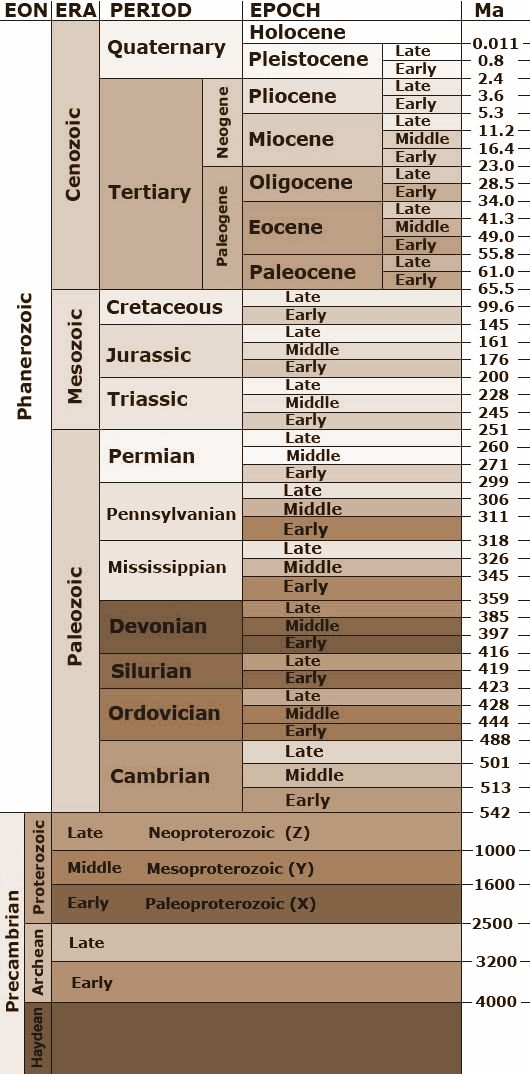
Geologic time scale – used to establish the history of evolution
Rock layers produced from volcanic activity (igneous strata) are dated via radiometric dating: a date is obtained based on the decay of radioactive elements within the rock. Fossils within or near the rock are given the same date.
Rock layers produced from sediment (sedimentary strata) are dated via relative dating: an estimated date is obtained by comparing fossils within the rock to fossils in layers within the geologic column.
Sometimes fossils are dated by the rock they are found in, and sometimes rock is dated by the fossils found in it. Any date arrived at using this circular method is based on speculation.
Fossils of organisms claimed to have lived for relatively short time periods, and only found within certain layers, are referred to as ‘index fossils’. Scientists use index fossils to date specific rock layers in the geologic column. Due to its dependence on index fossils, the geologic time scale is unreliable.
Dating via index fossils is based on speculation. Perhaps fossils have only been found within certain layers and not others; however, the fossils may very well exist in other layers, but nobody has found them. And what about the fact that organisms might have existed over hundreds of millions of years without having left any fossils at all?
There are many organisms alive today that are referred to as ‘living fossils’. Based on fossil records, these organisms were originally assumed to have died out many millions of years ago; however, in recent times they have been discovered alive.
This is proof that fossils estimated to be millions of years old may be far younger than claimed, and may have lived far later than claimed. Index fossils do not prove that organisms only lived during a specific time period, or that they have died out at all.
The coelacanth, believed to have become extinct during the end of the Cretacious Period (around 65 million years ago), was previously used as an index fossil. In 1934, coelacanths were discovered to be alive, and indexing via these fossils was invalidated.
The Wollemi pine, a native Australian tree, was believed to have become extinct during the Jurassic Period (around 150 million years ago). In 1994, a living Wollemi pine was discovered, unchanged from the original fossils.
In 1967, the Journal of Sedimentary Petrology published an article titled, “Flood Deposits, Bijou Creek, Colorado, June 1965”. The research was related to flooding that occurred after 48 hours of rain at Bijou Creek in Colorado, in 1965. The flooding left sediment that made up to twelve feet of stratified layers. The sedimentary layers were neat and uniform, identical to others represented in the geologic column — each of which scientists claim to be millions of years old. This research proves that multiple sedimentary layers can be formed in a short time period, especially in flood conditions and rapidly flowing water.
In 1980, in the space of just one day, the volcanic eruption of Mount St. Helens deposited stratified sediment layers up to 150 feet deep. In 1982, a further eruption caused snow to melt, resulting in a rapid mudflow. This carved canyons up to 140 feet deep into the previous sediment deposit, revealing the individual layers. Further snow melts resulted in other canyons being produced in a single day, one of which was Step Canyon, which is around 600 feet deep.
The sedimentary layers of Arizona’s Grand Canyon and those produced from the eruption of Mount St. Helens are stratified in the same way, and yet scientists claim that those in the Grand Canyon took millions of years to form.
As observable evidence shows that multiple stratified layers can be formed quickly, this goes against the claim that individual rock layers provide a measure of chronology.
In the Grand Canyon, rock representing three main stages of evolution (the Ordovician, Silurian, and Devonian periods), claimed to span 150 million years, is missing. These strata should sit between the Muav Limestone and Redwall Limestone layers.
It is impossible that no sedimentary layers were formed over the extremely long period of 150 million years, and the reason geologists give for the missing layers in the Grand Canyon is that erosion took place. One problem with this is that the layers either side of the 150 million years of missing rock are flat against each other, rather than having the uneven surface that erosion would cause.
Almost 80 percent of the geologic column consists of mudrock — sedimentary rock with a fine grain size, including mudstone, claystone, silt and shale. Scientists claim that mud deposits require mostly still water in order to form; therefore, according to scientists, it is a fact that mudrock formations must be millions of years old. This is given as a reason why a young Earth is impossible, due to the many separate layers of mudrock in the Earth.
In Science magazine, 14 December 2007, a study was published titled, “Accretion of Mudstone Beds from Migrating Floccule Ripples”. The research covered the deposition of mud, and was performed by Juergen Schieber, John Southard, and Kevin Thaisen — supported by a grant from the National Science Foundation.
Separate experiments were performed using calcium montmorillonite and kaolinite (extremely fine clays), and natural lake muds. The experiments revealed that mud starts to form in rapidly flowing water within a short time period, and also that the presence of organic matter with the mud enhances mud deposition from fast moving currents.
The reason for the research, according to Schieber, was that “In many ancient mudstones, you see not only deposition, but also erosion and rapid re-deposition of mud — all in the same place;” also, “The erosive features are at odds with the notion that the waters must have been still all or most of the time. We needed a better explanation.”
The fact that many mudstones hold evidence that they were created in rapid flowing water again reveals the general attitude of scientists, whereby any evidence going against a widely held theory is disregarded. A great deal of evidence against evolution is ignored in this fashion.
In 1946, geologist Reginald Sprigg discovered millions of fossils of Ediacara biota, soft-tissue organisms resembling jellyfish. The discovery was made in the Flinders Ranges, north of Adelaide, Southern Australia. The fossils were found within marine limestone spanning an area of around 200 miles, and were claimed to have lived during the Ediacaran Period (around 550 million years ago).
Scientists admit that the soft-tissue organisms became trapped rapidly in a large quantity of fine silt, which then rapidly hardened. The silt layer must have formed almost immediately, rather than taking the millions of years scientists claim limestone and other sedimentary rock requires; also, fossilisation must have occurred within days, as the soft tissue of jellyfish easily decomposes or is destroyed.
This discovery disproves the claim that sedimentary rock, such as limestone, must form slowly over millions of years; also, due to the quantity of fossils and the area they cover, the event leading to the organisms being trapped must have been cataclysmic. Scientists previously believed that only hard-bodied organisms could fossilise, once again revealing the level of speculation in claims regarding fossils.
Sandstone is also claimed to take millions of years to form. In Kingoodie Quarry, Scotland, in 1844, Sir David Brewster discovered what is known as the ‘Kingoodie artefact’: an iron nail within a sandstone block from the Cretaceous Period, within the Mesozoic Era (between 65 and 250 million years ago). The sandstone block was formed around the nail, with the head completely embedded in the rock. This signifies that the nail must have been made millions of years before man is supposed to have existed — according to evolution.
The theory that all of the strata formed over millions of years has no factual evidence to back it up. The observable evidence mentioned here disproves the ‘fact’ that mud deposits require mostly still water to form, and casts doubt upon the claimed age of sedimentary rock.
Scientists claim that there is evidence of mass extinction events in the past. The biggest of these events is the Permian-Triassic extinction event, which is claimed to have wiped out 95% of species around 252 million years ago.
Scientists also claim that during this event there were changes in sea level, along with massive volcanic eruptions that ignited organic matter. The eruptions also released a large quantity of material into the atmosphere, including mercury and greenhouse gasses, causing climate change. This in turn resulted in an extreme rainfall event that affected the entire planet.
It is interesting how all of these events support the Biblical account of the flood, which wiped most living things off the face of the Earth. Even with such evidence, a cataclysmic global flood is not even considered to be the cause of the separate layers in the Earth, and the fossils within them. A flood of these proportions would suggest rapid formation of stratified layers, which would remove one of the main sources of evidence supporting evolution.
Scientists have also claimed that crude oil takes millions of years to form. On December 18th, 2013, Engineers at the US Department of Energy’s Pacific Northwest National Laboratory (PNNL) came up with a process that converted algae to crude oil within minutes.
Previous processes for forming crude oil used dried algae, but the new process can be used in a mixture that is up to 90% water. The new process uses high pressures and temperatures to convert the algae, which fits in nicely with the conditions scientists claim to have occurred during the Permian-Triassic extinction event, and also fits in with the flood theory.
Evidence of rapid strata formation in polystrate fossils
Some rock strata have fossils of upright trees extending through them, which is evidence against evolution. Fossils extending through multiple rock layers are known as ‘polystrate’. Their existence suggests that the stratified layers they are found in must have formed rapidly, rather than taking the millions of years evolution requires.
Scientists admit — when it suits their theories — that some sediment layers can be formed rapidly. To counter the argument that a flood caused the rapid burial, a common theory offered by scientists is that the trees could have been buried over a period of thousands of years while still alive. This would explain why the trees did not rot during that time, and why they remained in an upright position.
Some of the strata in which the polystrate tree fossils occur are mudrock (such as shale). As scientists claim that the layers around the fossils were formed within just a few thousand years at most, it would further contradict theories that mudrock must be formed slowly over millions of years.
Some polystrate tree fossils have been discovered to be upside down, and many of the fossils have no roots, so cannot have been alive during burial. While the layers built up around them over thousands of years, trees that were upside down or had no roots would have rotted away before fossilisation could occur. Due to this, the fossils must have been formed within a few years at most. The only sensible conclusion must be that the trees were deposited within a very short space of time, and most likely via a flood.
Many polystrate tree fossils have been discovered within cliffs at the Bay of Fundy, near Joggins, Nova Scotia. The tree fossils were found to extend through coal seams in the rock, and in some places individual fossils extended through multiple coal seams. Scientists claim that coal takes millions of years to form; however, as the trees cannot have remained alive for millions of years, the coal must have been formed within a short time period.
Fossils of marine organisms have been discovered alongside the tree fossils, indicating that sea water was involved in the burial of the trees, backing up the flood theory. Both upright and upside down tree fossils have been discovered beside each other, within the same strata. These discoveries indicate rapid burial associated with a cataclysmic flood.
Written in 1882 by Charles Lyell, the man who influenced Charles Darwin, the book ‘Elements of Geology’ describes polystrate tree fossils, and suggests that the fact they are upright disproves the flood theory. Around one hundred years later, this speculative opinion was proved false. Observable evidence has recently revealed how a cataclysmic event can produce such fossils.
The landslides caused by the eruption of Mount St. Helens in 1980 tore trees from their roots and deposited them into Spirit Lake. A recent study of the lake revealed that over a short time period almost 20,000 trees sank into an upright position at the bottom of the lake and became fossilised. An article titled, ‘Erect floating stumps in Spirit Lake, Washington’, written by Harold G. Coffin in 1983, describes this in detail.
Observable evidence reveals how upright trees with no roots can be deposited in a short time period, allowing fossilisation. Shockingly, many scientists still cite Lyell’s opinions and disregard observable scientific evidence, going against their own principles.
It is claimed that coal is formed through the slow accumulation and decomposition of plant debris (peat), which is then compacted by heat and pressure over millions of years. Peat layers averagely increase by one millimetre per year; however, this is obviously not always the case. As some polystrate tree fossils extend through multiple coal seams, this suggests that peat layers can be formed much faster than expected — especially if the trees were claimed to be alive during the process.
The fossilised vegetation found within coal seams is similar throughout, showing no evidence of evolution via transitional changes. This would also suggest that peat formation in these situations was rapid.
It is clear that peat can form quickly based on observable evidence. From the landslides of Mount St. Helens, bark from the trees deposited into Spirit Lake formed a peat layer on the bottom of lake within a forty year period. The peat layer matched the composition found within coal layers.
In 1984, the journal Organic Geochemistry contained an article on the rapid formation of coal. The article described how Argonne National Laboratory in Illinois discovered that coal was able to form within months. The process did not require any decay in vegetation, or any pressure.
All that was required to form coal was the presence of organic material, buried at a depth where there is no oxygen, along with thermal reactions. Coal was found to form in this situation in only 36 weeks, at a temperature of 150 degrees Celsius. The formation was much faster if the temperature was higher.
Scientists ignore evidence on the rapid formation of peat, and the short time period required to convert organic material to coal. The only reason this evidence is ignored is that it goes against the millions of years required for evolution to occur.
The unreliability of radiocarbon dating
Radiocarbon (or carbon-14) dating is a process used to calculate the age of organic matter, and occasionally non-organic matter, based on the amount of carbon it contains. The carbon element’s radioactive carbon-14 isotope decays over time, and this is compared against the carbon-12 isotope, which does not decay (a stable isotope).
Although accuracy beyond 4,000 years cannot be proven, it is claimed that carbon dating is accurate to within 50,000 years. According to scientists, any organism having died over 50,000 years ago would contain insufficient radiocarbon, meaning that the results would be inaccurate.
Two dates are generally obtained when using this method: one assuming that the decay rate has been constant, and the other using calibration to apply estimates of decay over the thousands of years. Both are based on assumptions.
Even with the claim of 50,000 years accuracy, radiocarbon dating has still been used to date things estimated as being millions of years old. Many scientists have agreed that this process is unreliable.
Due to samples containing so few radiocarbon atoms, a very small amount of contamination can affect dates by tens of thousands of years. The amount of radiocarbon present within a sample can also be affected by changes in the atmosphere, and in the Earth’s magnetic field, which scientists say is decreasing.
Large amounts of carbon-12 have been released into the atmosphere in various ways, greatly affecting the validity of radiocarbon dating. Carbon-12 is released via the use of fossil fuels, via gases released through volcanic activity, and through earthquakes – which release carbon-12 from limestone and substrates (at a rate scientists are unable to accurately calculate).
Another scientific claim is that organic remains containing radiocarbon must be at most 100,000 years old. Organic remains, including coal, which are claimed to be millions of years old, have been found to contain radiocarbon. When faced with this argument, scientists usually claim that this is due to contamination; however, by upholding this explanation, scientists are confirming that radiocarbon dating is unreliable due to contamination.
In 1971, an article in the Antarctic Journal of the United States, titled “Mummified Seals of Southern Victoria Land,” revealed that freshly killed seals had been dated as having died 1,300 years ago, and some that died up to 30 years ago were dated at 4,600 years. Recently, radiocarbon dating of ‘live’ mollusc shells off the Hawaiian coast revealed that they had died 2,000 years ago, and in Australia a 50-year-old felt miners hat that had fossilised was dated at 6,000 years old.
The unreliability of isochron dating
Isochron dating is a modern technique, using multiple samples taken from a specific rock. It provides a far more reliable method than standard radiometric dating, using elements created at the time the rock was formed.
An isotope of the parent element decays to an isotope of the daughter element, and the rate of decay is measured; also, a stable isotope, taken from an element in the same family as the daughter, is used to further compare against the rate of decay.
There are various isochron dating techniques, such as rubidium-strontium dating (radioactive rubidium-87 decays to strontium-87) and uranium-lead dating (radioactive uranium decays to lead). Here we’ll look at potassium-argon dating (radioactive potassium-40 decays to argon-40).
Potassium-argon dating is a process used to measure radioactive potassium decay within volcanic rock in order to determine its age. Radioactive potassium decays to argon gas, and the date of volcanic rock is based on this rate of decay.
The age of the rock presented by this method is attributed to any fossils found within or near it. The technique assumes that no argon gas existed within the lava, and that the decaying radioactive potassium was fully contained when the lava hardened into rock.
There is evidence that contamination does occur, giving amazing results from rock formed within our lifetime. Volcanic rock produced by an eruption at Mt Ngauruhoe in New Zealand, in 1954, was potassium-argon dated as being up to 3.5 million years old. In 1968, rocks known to have been created from an eruption in 1800 by the Hualalai volcano in Hawaii were dated by scientists to be 160 million to 3 billion years old.
The lava dome formed by Mount St. Helens in 1980 only took about five years to solidify into rock, and these rocks were potassium-argon dated as being 350,000 – 2.8 million years old.
Conclusion of dating techniques
Radiocarbon dating requires that there is no contamination within the sample. It also requires that the amount of carbon in the atmosphere has been constant over time, which is obviously untrue. Due to this, calibration is used to provide a more accurate date, although the value used for calibration is based on assumption.
Isochron dating is based on the assumption that the daughter element is not present at the time the rock is formed, and that it has not entered or left the rock at any stage, and that the rate of decay has remained constant all of the time.
Radiometric and isochron dating are both based on assumption, and accuracy is always in doubt. There are flaws in all dating methods, which is why new methods are continually being sought after. Despite this, each new method is still treated as though it is irrefutable.
The definition of science, provided by the Oxford dictionary, is:
“The intellectual and practical activity encompassing the systematic study of the structure and behaviour of the physical and natural world through observation and experiment.”
Dating techniques have been proven unreliable by using them against items created within a known date in human history, as shown above. In fact, modern scientific discoveries and observations have provided a great deal of evidence against evolution – proving many theories to be incorrect. Regardless of this, observable evidence is mostly ignored if it goes against the theory of evolution.
Evidence backing up the flood theory and young Earth
Fossilisation is not a common occurrence. Dead things naturally decompose and are recycled back into the dust from which they came.
In order to become fossils, dead organisms must be buried in matter containing water that is high in carbonates and rich in minerals: this prevents decomposition and causes tissue to be replaced by the minerals.
Scientists agree that the process of fossilisation can take place quickly. Bones, for example, can fossilise within five to ten years.
Before they get a chance to fossilise, dead organisms could decompose, be eaten, or be destroyed in some other way; therefore, in order to become fossilised they must be buried quickly. A flood is the perfect way to create fossils: it provides a large amount of both water and mud in which to rapidly bury things. There is plenty of geological evidence that supports a global cataclysmic flood of enormous proportions.
If a global cataclysmic flood did occur, it would only take days to create the sedimentary layers currently estimated as being millions of years old. This would disprove the theory of evolution, or suggest that evolution occurred extremely quickly — at a rate of which we find no evidence today.
Even the most modern radiometric dating techniques are known to be flawed, and it is speculation that stratified layers have formed over millions of years. This evidence suggests that the Earth is far younger than current estimates.
Scientists have taken fragments of factual evidence and attempted to piece them together in order to prove the theory of evolution. Recent scientific discoveries, as mentioned above, have provided evidence against evolution, taking away any stability the theory was claimed to have. They also prove the high level of speculation surrounding many widely held claims.
Regardless of the facts, any discoveries that can be used as evidence against evolution is disregarded by scientists. The reason the flood theory is dismissed is that, along with the religious connection, it suggests that the sedimentary layers are not millions of years apart and neither are the fossils within them. Without millions of years there can be no evolution.
The Bible mentions the story of Noah and the ark, whereby eight people and various creatures were the only living things saved from a great flood that destroyed the rest of mankind. As well as the Bible mentioning that a great flood occurred, there are literally ‘hundreds’ of legends from ancient civilisations all over the world that mention a cataclysmic flood of enormous proportions, where the survivors escaped by a boat. Many of these stories, including that in the Bible, claim that the flood was a punishment for the wickedness of mankind.
The Central American Maya Civilisation was extremely advanced in its study of celestial activity, and had the most accurate calendar in the world — which retained its accuracy many hundreds of years after their demise. Every 5,125 years the Mayans believed that a cataclysmic cycle comprising heightened solar activity occurred, which caused a displacement in the rotation of the Earth. The next cycle was calculated to occur on December 21st, 2012.
The Mayans claimed that the previous cycle (5,125 years prior to 2012) resulted in a great flood that left few survivors. This is very interesting as the beliefs of the Mayan civilisation not only support the flood theory but further suggest that the reason for it was due to displacement of the Earth’s rotation.
By following the Biblical time line, and archaeological evidence, the age of the Earth is presented as roughly 6,656 years old: with the time of the flood presented as exactly 1,656 years after the Earth was created, and the time from after the flood until 2012 as roughly about 5,000 years (around 3,000 BC). This fits in perfectly with the Mayan calendar.
The oldest known written historical records only go back roughly 5,000 years, which would make sense if a global cataclysmic flood occurred at that time. Also, dating trees by their rings has shown that the oldest tree was a bristlecone pine in Nevada, dated at 4,800 years old, well within the 5,000 years since the flood. According to the scientific community, we have no strong evidence that any tree has lived beyond 5,000 years
Scientists claim that cave paintings provide evidence of historical records, and that these go back as far as 65,000 years. The age of the paint was determined using the highly unreliable radiocarbon dating method. Scientists agree that the accuracy of these readings is questionable, due to the very small size of material that was dated. Also, there is still the question of why there was a sudden appearance of writing around 5,000 years ago, and nothing before that.
It is also claimed that trees currently still living in Tasmania and Sweden are up to 10,000 years old. While the trees themselves have definitely not lived for 10,000 years, it is claimed that they are part of root systems that have been alive for 10,000 years. As there is no way of dating living root systems, this was also determined using radiocarbon dating.
Mitochondrial DNA and the origin of man
Mitochondria are energy producing structures within cells, and they contain their own DNA — separate to our nuclear DNA. Nuclear DNA is inherited from both parents, whereas mitochondrial DNA (mtDNA) is inherited only through the mother.
Although each person’s mtDNA remains mostly identical to their mother’s, there is a rate of mutation that occurs. From this rate of mutation, the mtDNA of two people can be compared in order to determine how closely related they are.
The origin of modern man is claimed to be 200,000 years ago. This claim was based on estimated rates of mtDNA mutation, assuming that the estimated rate of mutation was constant, and based on the speculation that humans and chimpanzees had a common ancestor living 5 million years ago. Regardless of the speculation and pure assumption involved in this claim, it is still treated as a fact.
The First International Workshop on Human Mitochondrial DNA, held in October 1997, researched mtDNA mutation rates. Taking recent measurements into account, the researchers found that mutation rates in mtDNA were much higher than first thought, and the original estimate was changed from 200,000 years to 6,500 years — which is in line with the Biblical age of the Earth. As this is evidence against evolution it is understandable why it has been disregarded.
In ScienceDaily, 27 October 2015, a report was published where scientists at Oxford University’s Research Laboratory for Archaeology, led by Professor Greger Larson, studied the genes of White Plymouth Rock chickens. The research brought about the discovery that two mutations had occurred in the mitochondrial genomes of the birds in only 50 years. This rate of mutation was 15 times faster than the accepted rate of change, being 2% per million years.
Scientists have cited this as evidence of evolution, even though no information leading to new functionality was added to the gene pool. The more important issue that has been ignored is that the observational evidence of a faster mtDNA mutation rate in the chickens backs up the research on mtDNA in 1997 (above), confirming that the origin of mankind is far earlier than the estimate of 200,000 years.
Conclusion — summary of evidence against evolution
Using the fossil record to prove transition between species is based on speculation. As with the disproved theory of horse evolution, we cannot guarantee that claimed transitional forms didn’t live together during the same time periods. Some organisms claimed to be transitional forms could have lived for millions of years without having left any fossils, or their fossils could exist but remain undiscovered.
Similarities in DNA do not prove that organisms are closely related. Evolution suggests that some organisms have extremely high similarities through convergent evolution.
Any observed genetic changes within organisms have been brought on by the deactivation or reactivation of existing genes, by the alteration of existing information, or by loss of information. There is no observable evidence to prove that new genes providing new functionality can be added to the gene pool. This in itself is evidence against evolution.
The claim that stratified rock layers provide a chronological time scale is based on speculation. Observable evidence has shown that separate layers can be formed in days, with those produced from the eruption of Mount St. Helens in 1980 being a perfect example.
Observable evidence has shown that mudrock does not require millions of years to form, and is often formed in rapid flowing water. Due to 80% of the geologic column consisting of mudrock, this signifies that the age of the Earth is many millions of years younger than claimed.
Radiocarbon dating has been proven unreliable due to the high possibility of contamination, and changes in atmospheric CO2 levels over time. The claim of carbon dating being accurate to 50,000 years is also based on assumption, as there is no way to prove this, due to historical records only going back around 5,000 years.
Even the most modern method of dating igneous rock is based on speculation, involving assumptions. This has proved unreliable when used on rock created within our lifetime.
Scientific evidence suggests that large amounts of sediment were deposited by volcanic activity, a global cataclysmic flood and an extreme rainfall event. This created a vast proportion of the sedimentary and igneous strata we see today, and the fossils and coal within them.
Organisms must be rapidly buried in mud for fossilisation to occur. Given the amount of fossils in the stratified layers, a cataclysmic flood is more likely to have caused both the stratified layers and the fossils within them.
Stories from hundreds of civilisations around the world also back up the claim of a global cataclysmic flood. As evolution requires millions of years, scientists reject the flood theory as it suggests that sediment layers were formed rapidly.
The origin of man is claimed to be 200,000 years ago. This is not only based on assumption, but also goes against new reliable scientific evidence, which suggests that mankind originated 6,500 years ago.
It is strange how modern man prefers to teach evolution and hold it as fact, yet completely dismisses new scientific evidence against evolution. Such evidence is ignored purely to uphold the theory of evolution. Mankind will dismiss anything that could back up the existence of God.
“There are only two possibilities as to how life arose. One is spontaneous generation arising to evolution; the other is a supernatural creative act of God. There is no third possibility. Spontaneous generation, that life arose from non-living matter was scientifically disproved 120 years ago by Louis Pasteur and others. That leaves us with the only possible conclusion that life arose as a supernatural creative act of God. I will not accept that philosophically because I do not want to believe in God. Therefore, I choose to believe in that which I know is scientifically impossible; spontaneous generation arising to evolution.” — George Wald, PhD, Harvard University (Nobel Prize Winner), Scientific American Vol. 199, 1958
For more detailed information the following Websites are recommended for reference: